
Most homeowners focus on thermostats and light bulbs when trying to cut utility costs, but the biggest savings often hide in parts of the property that rarely get a second look. A sagging door seal, an overgrown tree, or an outdated electrical panel can quietly drain money month after month without ever showing up as an obvious problem. The good news is that many of these fixes are one-time investments that keep paying you back for years. This guide walks through the overlooked upgrades worth your attention, so you can stop losing money to inefficiencies you didn’t even know you had.
Upgrade Your Entry Door for Better Insulation

Front and back doors take a beating from weather, sunlight, and daily use, and over time their seals and frames warp just enough to let conditioned air escape. Many homeowners assume a door is fine as long as it still opens and closes properly, but a drafty entry point can be responsible for a surprising percentage of heating and cooling loss. Working with an experienced entry door company can help you identify whether your current door is simply misaligned or truly past its efficient lifespan. Newer models come with improved weatherstripping, insulated cores, and tighter frame tolerances that make a measurable difference on energy bills.
Beyond insulation, a quality door replacement also improves home security and curb appeal, which adds value beyond just utility savings. If you’re noticing visible light around the frame, condensation, or a draft near the threshold, those are signs it’s time for a closer look.
- Check for daylight visible around the door frame when closed
- Feel for drafts near the bottom sweep and hinges
- Look for warping or cracking in the door material
- Ask about insulated core options when replacing an older door
Service Your Cooling System Before Peak Season
Air conditioning systems lose efficiency gradually, which makes it easy to miss the slow creep of higher bills until summer hits in full force. Dirty coils, low refrigerant, and clogged filters all force a unit to work harder than it should, consuming more electricity to produce the same amount of cooling. Scheduling a seasonal tune-up with one of the local AC companies before temperatures spike can catch these issues early and keep your system running at its rated efficiency. A properly maintained unit not only costs less to run but also tends to last longer before requiring a full replacement.
It’s also worth asking a technician about your system’s age and whether a newer, higher-efficiency model would pay for itself in reduced monthly costs. Many homeowners are surprised to learn how much older units lag behind current efficiency standards.
- Replace or clean air filters every one to three months
- Keep outdoor condenser units clear of debris and vegetation
- Schedule professional maintenance at least once a year
- Ask about smart thermostat compatibility during a service visit
Rewire Outdated Electrical Panels for Efficiency
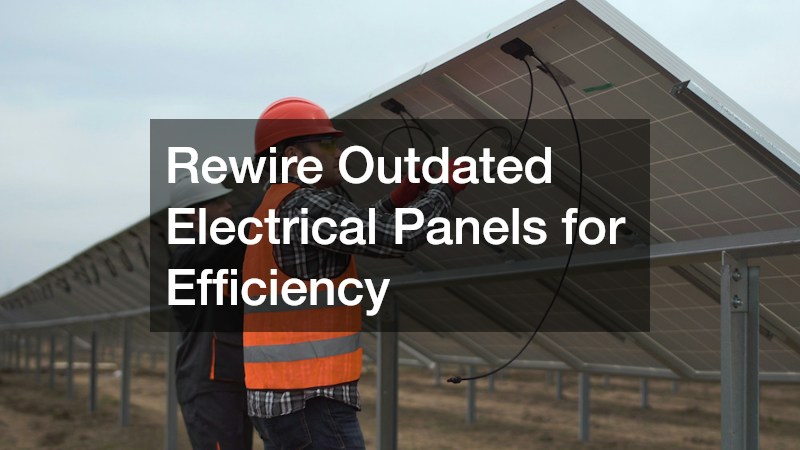
Older homes often run on electrical panels that were never designed for the number of devices and appliances modern households use. Many were built with 60 or 100-amp service, while today’s homes with central air, electric ranges, and multiple entertainment systems typically need 150 to 200 amps to run efficiently. An overloaded or outdated panel doesn’t just risk safety problems like tripped breakers or overheating, it can also cause energy to be used less efficiently across the home, as circuits struggle under loads they weren’t built to handle. Bringing in a licensed electrician to evaluate your panel and wiring can reveal whether upgrades like dedicated circuits, surge protection, or a higher-capacity panel would reduce strain on your system. An inspection typically costs a few hundred dollars but can uncover outdated fuse boxes, aluminum wiring, or corroded connections that waste energy and pose fire hazards. A full panel upgrade usually runs between $1,500 and $4,000 depending on your home’s size and local permitting requirements, but it often pays off through fewer nuisance outages and better appliance performance. This is especially important if you’ve added major appliances, a home office, or an electric vehicle charger since your home was built. Each of these additions draws significant power and may warrant its own dedicated circuit to prevent overload and voltage drops that quietly inflate your energy use. If you’re planning renovations like a kitchen remodel or a finished basement, it’s worth having your electrician assess panel capacity before the work begins rather than after.
An electrical inspection can also uncover smaller fixes, like aging outlets, loose connections, or deteriorating wiring that allows power to leak away as waste heat instead of reaching your appliances. Outlets and switches more than 20 years old often show signs of wear that reduce conductivity, forcing devices to draw more current than necessary just to function properly. Even a few degrees of excess heat at a connection point signals energy being lost, and multiplied across a whole house, these losses can add a noticeable amount to monthly bills. A licensed electrician can typically spot these issues using a simple thermal scan or load test, often as part of a broader panel inspection costing $150 to $400. Common culprits include backstabbed outlets, aluminum wiring from homes built before 1980, and breakers that have degraded from years of cycling on and off. Replacing a handful of problem outlets or tightening worn connections usually runs far less than a full rewiring job. These small inefficiencies add up quietly over time, and addressing them is often more affordable than homeowners expect. Tackling them alongside a panel upgrade also means you’re not paying for a separate service call down the road, making it a practical bundle to request when scheduling electrical work.
- Flickering lights, warm outlets, or breakers that trip more than once a month signal panel strain and shouldn’t be ignored
- Homes over 30 years old often still run on 60-100 amp panels, while modern households typically need 150-200 amps to handle current demand
- A wiring inspection costs far less than the potential damage from an overloaded or outdated panel
- Dedicated circuits reduce strain from large appliances like HVAC systems, electric ranges, and dryers, preventing voltage drops that waste energy
- Upgraded panels support future additions like solar power, EV chargers, and smart home systems without costly retrofits later
- Replacing old aluminum wiring with copper can also improve conductivity and reduce energy loss
- A licensed electrician can confirm whether your panel meets current code and is sized correctly for your home’s load
Choose Flooring Materials That Improve Insulation

Flooring is rarely thought of as an energy factor, but certain materials do a far better job of retaining warmth and reducing strain on heating systems than others. Thin tile or worn carpet over an uninsulated subfloor can let heat escape into crawl spaces or basements below. Consulting with flooring services about underlayment options and insulated subfloor materials can make a noticeable difference in how evenly your home retains temperature. This is particularly relevant in older homes where original flooring has worn thin or was never properly insulated to begin with.
Replacing flooring also presents a good opportunity to address squeaky subfloors or gaps where air can pass through, both of which compound heat loss over time.
- Insulated underlayment reduces heat loss through the floor
- Carpet typically retains more warmth than tile or hardwood alone
- Sealing subfloor gaps prevents drafts from crawl spaces
- Radiant floor heating compatibility varies by material type
Add Shade Structures to Reduce Cooling Costs
Direct sun exposure on windows and patios can raise indoor temperatures significantly, forcing air conditioning systems to work overtime during the hottest parts of the day. Installing retractable or fixed shade coverings is one of the simplest ways to block solar heat before it ever reaches your living space. A reputable awning company can help you choose coverings sized correctly for your windows, patio, or deck to maximize shade without blocking natural light entirely. Many modern awnings are also built with UV-resistant and weatherproof materials that hold up for years with minimal maintenance.
Homeowners often notice a difference in indoor comfort within days of installation, particularly in west-facing rooms that absorb the most afternoon sun.
- South and west-facing windows benefit most from exterior shading
- Retractable awnings allow seasonal flexibility for sun and shade
- Quality materials resist fading and weather damage over time
- Shaded patios reduce heat transfer into adjoining indoor rooms
Build an Outdoor Living Space That Reduces Indoor Strain
Expanding usable outdoor space might not seem like an energy upgrade, but it can meaningfully reduce indoor energy consumption during warmer months. A well-built deck encourages more time spent outside for meals, relaxation, and entertaining, which means less time running air conditioning, televisions, and kitchen appliances indoors. Even shifting a few summer dinners per week to an outdoor table can noticeably reduce oven and stovetop use, which in turn keeps kitchens cooler and lightens the load on your AC. Orientation matters as much as the deck itself. A deck positioned to catch prevailing breezes or shaded by existing trees stays comfortable longer into the afternoon, while one exposed to direct western sun may become unusable during peak heat. Adding a pergola, retractable awning, or strategically placed shade sail can extend comfortable hours outside well into summer evenings, further delaying the point when everyone retreats indoors and cranks up the air conditioning. Working with a professional deck company ensures the structure is built to code, properly drained, and positioned to take advantage of natural shade or breezes. Experienced builders can also recommend materials, like composite decking that resists heat absorption, so the surface stays walkable even on hot days. They’ll factor in details such as railing placement for airflow and proximity to the house to maximize how naturally the space ventilates. A thoughtfully designed deck can essentially function as an extension of your living space without adding to your utility bill. Over a full season, that added square footage of comfortable, low-energy living space can add up to real savings while also increasing your home’s overall value.
A well-placed patio, pergola, or covered deck does more than extend your living space outdoors — it acts as a buffer between your home’s interior and the elements, cutting down on how hard your HVAC system has to work. A pergola positioned on the south or west side of your house can block a significant portion of direct summer sun before it ever hits your windows and walls, easing the cooling load inside. Materials matter here too. Composite decking requires less maintenance and lasts longer than traditional wood, reducing long-term replacement costs, and many composite products also stay cooler underfoot since they’re engineered to reflect rather than absorb heat. Shade structures paired with strategically placed trees or retractable awnings can lower surface temperatures near your home by several degrees, which translates into less heat transfer indoors during peak summer months. Even simple additions like a shaded seating area can shift daily habits — people naturally spend more time outside in comfortable weather, which means less time running air conditioning, lights, and appliances indoors. Over a season, that small behavioral shift adds up to measurable savings on your utility bill.
- Position decks and patios on the side of the house that captures prevailing summer breezes, which can reduce the urge to run AC during mild evenings
- Choose composite decking over wood to cut maintenance to an occasional hose-down, avoiding the energy and cost of sanding, staining, or sealing every year
- Grade outdoor living spaces to slope away from the foundation (about 1 inch per foot) so runoff doesn’t seep into basements or crawl spaces and spike dehumidifier use
- Add a pergola, retractable awning, or mature shade tree over decks to block direct sun, often dropping surface temps by 10-20°F and making outdoor rooms usable well into summer
- Treat the outdoor space as a true extension of the home — a shaded, breezy deck or patio draws activity away from indoor AC zones, lowering overall cooling demand
Organize Your Garage to Protect Energy Efficiency

An attached garage that’s cluttered and disorganized often gets left with its door open longer than necessary, letting outside air seep into the home through connecting doors and shared walls. Installing garage storage systems helps keep items off the floor and organized along walls or ceilings, which makes it easier to park efficiently and close the garage promptly. This matters more than most homeowners realize, since an attached garage without proper insulation can act as a direct pathway for temperature loss into adjacent rooms.
A well-organized garage also makes it easier to spot maintenance issues early, like gaps around the garage door or exposed insulation that needs attention.
- Vertical storage systems free up floor space for efficient parking
- Reducing clutter encourages quicker garage door closure
- Insulated garage doors pair well with organized storage layouts
- Easy access to tools prevents delays during seasonal maintenance
Maintain Your Septic System to Avoid Costly Waste
Homes on septic systems rely on a delicately balanced underground process, and when that system runs inefficiently it can lead to unexpected water waste and higher utility costs. Requesting septic estimates periodically helps homeowners understand the current condition of their tank and drain field before small issues become expensive repairs. A failing septic system can force households to use more water than necessary while compensating for drainage problems, which shows up directly on water bills.
Regular pumping and inspection schedules also extend the lifespan of the system, preventing the kind of major failure that leads to emergency repairs and significant water loss.
- Have septic tanks inspected every one to three years
- Watch for slow drains as an early warning sign
- Avoid flushing items that strain the system unnecessarily
- Keep heavy vehicles off the drain field area
Clear Overgrown Trees to Protect Roofing and Utility Lines
Large trees growing too close to a home can interfere with roofing, gutters, and even utility lines in ways that quietly increase energy costs. Overhanging branches block sunlight that might otherwise provide natural warmth in winter, while root systems can damage underground pipes that affect water efficiency. Scheduling tree removal for trees that pose a risk to the roof or foundation protects both the structure and the systems running through the yard. Overgrown branches touching power lines can also create safety hazards and intermittent electrical issues that are easy to overlook.
Thinning out dense tree cover near windows can additionally allow more natural light into the home, reducing dependence on artificial lighting during the day.
- Keep branches trimmed at least six feet from the roofline
- Watch for roots growing near septic or water lines
- Remove dead or diseased trees before storm season
- Trim growth away from power lines for safety
Plan Ahead for Renovation Projects Without Water Disruption
Many of the upgrades mentioned above involve temporary disruptions to normal household routines, especially when a project requires crews on site for multiple days. For larger renovation projects, particularly those involving outdoor work like deck building or septic repairs, arranging portable restroom rentals can keep the project moving without interrupting household plumbing access. This is a detail that’s easy to overlook during planning but can prevent unnecessary strain on existing bathroom facilities during a busy renovation.
Thinking through logistics like this ahead of time helps renovation projects stay on schedule, which ultimately gets your efficiency upgrades completed and paying off sooner.
- Useful for multi-day outdoor construction projects
- Reduces wear on household plumbing during renovations
- Keeps worksites compliant with contractor requirements
- Simplifies logistics for larger property upgrades
Lowering your utility bills doesn’t always require a dramatic renovation or an expensive new system. Often it’s the overlooked details, a drafty door, an aging panel, an overgrown tree, that quietly cost the most over time. Start by walking through your property with fresh eyes, noting the small inefficiencies that have become easy to ignore. Addressing even two or three of these areas this year can set you on a path toward a more efficient, lower-cost home for years to come.