
The outside of a house tells its story at a glance. Fresh color on the siding, straight lines along the eaves, a sturdy deck off the back door, and healthy canopies overhead all suggest a property that is well cared for. A leaning outbuilding, peeling trim, soft deck boards, or a patio that has heaved out of level suggest the opposite, even when the interior is in great shape. For most owners, the exterior is also where the biggest threats to the structure begin, since sun, rain, wind, and freeze-thaw cycles never take a day off.
A yard ready for every season balances beauty with protection. The shell and drainage system must shed water reliably, canopies must be healthy and safely clear of the house, and outdoor living spaces such as decks and patios must be built to handle years of use. Below ground and behind the walls, plumbing and wastewater systems need regular attention to keep everything running smoothly. Tackling these projects with care transforms the exterior into a place that looks inviting and stands up to whatever the calendar brings.
Leaning Walls and a Cracked Slab Out Back
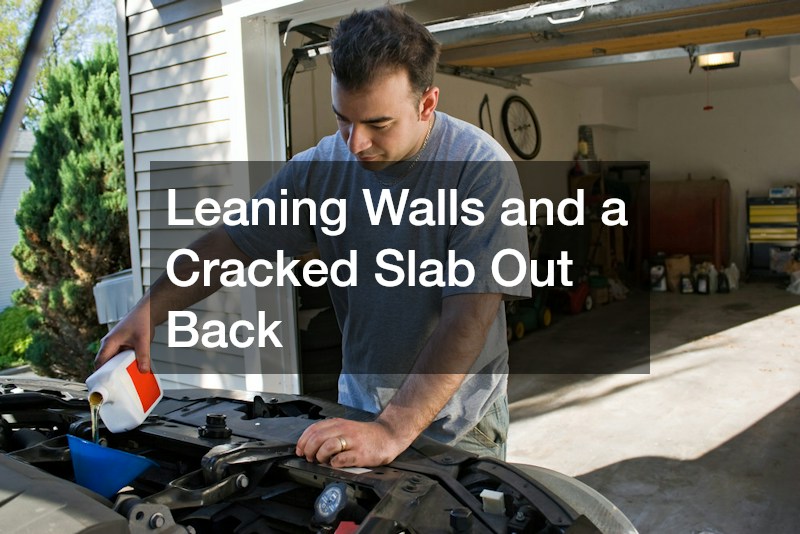
Detached parking structures and workshops often age faster than the main house, especially when they were built with minimal footings or on poorly compacted soil. Over time, walls lean, slabs crack and heave, and rot spreads through sill plates and wall framing where wood meets damp concrete. Shingles curl, overhead panels bind in warped openings, and the structure becomes an eyesore that may no longer be safe to use or store valuables in.
A full garage replacement begins with assessing the existing structure and site, then obtaining permits and confirming setbacks and zoning requirements. The old building and slab are demolished and hauled away, and the subgrade is compacted before new footings and a reinforced slab with a vapor barrier are poured. Walls are framed on treated sill plates anchored to the foundation, sheathed, wrapped, and finished to match the house. A new shell, an insulated overhead panel, and updated electrical service complete a structure built to last for decades. Matching the siding, trim, and shingles to the house makes the new building look like it was always part of the property.
Fresh Color That Protects Siding and Trim
Exterior finishes serve as the first line of defense against moisture, ultraviolet light, and temperature swings. As they age, they fade, chalk, crack, and peel, exposing bare wood to water. Siding and trim then swell, split, and rot, especially around windows, doors, and corners where water collects. Faded and flaking surfaces also make the property look tired and neglected, lowering curb appeal and resale value.
A professional exterior painting service starts with careful preparation, which determines how long the finish will last. Surfaces are washed with a mildewcide solution to remove dirt, chalk, and mildew, loose coatings are scraped and sanded, and rotted wood is replaced. Bare spots are primed, and gaps around trim, windows, and doors are sealed with elastomeric caulk. Two coats of premium acrylic exterior finish are applied within the manufacturer’s temperature and humidity range, and colors are chosen to complement the shingles, stone, and surrounding plantings. Doors, shutters, and railings receive a durable semi-gloss that resists scuffs and weather.
Expert Eyes on Aging Canopies
Mature canopies add shade, beauty, and value, but they also change over time in ways that are not always obvious. Decay can develop inside the trunk, roots can be damaged by construction or compaction, and insects or diseases can weaken limbs. Branches growing over the house scrape shingles, clog drainage channels, and provide access for squirrels and raccoons. Without professional evaluation, owners may not realize a specimen is in trouble until a limb falls.
A certified arborist evaluates canopies with a trained eye, inspecting the crown, trunk, root flare, and surrounding soil for signs of decay, cracks, fungal growth, pests, and structural weakness. Tools such as resistance drills and sonic tomography can measure internal decay without damaging the wood. Based on the findings, the specialist recommends pruning to remove dead and hazardous limbs, cabling to support weak unions, soil care to improve health, or removal when a specimen cannot be safely retained. Regular evaluations every few years catch new problems early and keep canopies healthy for generations.
Storm-Damaged Trunks That Have to Go
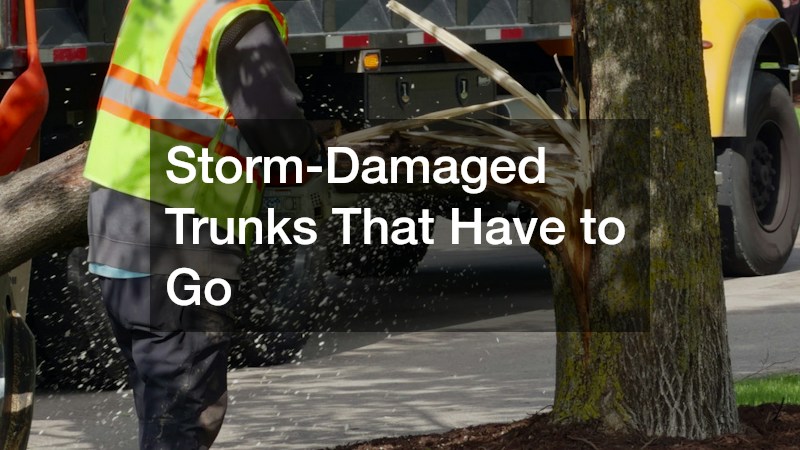
Severe storms can split trunks, tear off major limbs, or uproot entire specimens, leaving them leaning against the house, hung up in neighboring canopies, or tangled in power lines. Damaged wood under tension can spring unpredictably when cut, making cleanup extremely dangerous for anyone without the right training and equipment. Even specimens that survive the storm may be left with cracks and wounds that make them unstable.
Experienced tree removal services take a careful, methodical approach to storm-damaged specimens. Crews assess hazards, including power lines, structural damage, and tension in the wood, and coordinate with utilities when lines are involved. Cranes, aerial lifts, and rigging systems lift and lower heavy sections in a controlled manner, protecting the house and surrounding property. Trunks are cut in a sequence that safely releases tension, wood is chipped or hauled away, and stumps are ground below grade so the area can be restored. Photos and written documentation of the damage support insurance claims and speed up approval.
Curling Shingles and Failing Flashing
Asphalt shingles curl and crack as they age, losing the flexibility that helps them lie flat and shed water. Granules wash away, exposing the asphalt to ultraviolet light and accelerating deterioration. Flashing around chimneys, walls, and vents corrodes or pulls loose, and sealant dries out and cracks. Together, these failures let water reach the underlayment and decking, leading to leaks, rot, and mold in the attic and ceilings below.
An experienced roofer inspects the shingles, flashing, and attic to determine whether targeted repairs or full replacement is the better choice. Repairs include replacing damaged shingles, rebuilding step and counter flashing, and installing new pipe boots. When replacement is needed, old materials are stripped to the deck, damaged sheathing is replaced, and ice-and-water membrane is applied at eaves and valleys with synthetic underlayment elsewhere. New flashing and architectural shingles are installed to manufacturer specifications, and attic ventilation is balanced so the attic stays cool in summer and dry in winter, helping the new shingles reach their full service life.
Soft Boards and Wobbly Railings Underfoot
Outdoor platforms take constant abuse from sun, rain, snow, and foot traffic. Boards that stay damp rot from the ends and along fasteners, leaving soft spots that can give way underfoot. Ledger boards attached improperly to the house can pull away, and posts set directly in soil decay at grade. Wobbly railings are one of the most serious hazards, since a failure can lead to a dangerous fall, especially on elevated structures.
A qualified deck contractor inspects the ledger connection, joists, beams, posts, footings, boards, and railings to identify rot, loose fasteners, and code deficiencies. Ledgers are properly flashed and secured to the house with structural screws or through-bolts, rotted framing is replaced, and posts are set on concrete footings with metal post bases. Worn boards are replaced with pressure-treated lumber, hardwood, or composite, and railings are rebuilt with secure post connections and balusters spaced no more than four inches apart. A fresh coat of stain or sealer on wood boards, or a simple wash for composite, keeps the surface looking new.
Stone Patios That Stay Level for Decades

Patios and walkways set on thin or poorly compacted bases quickly settle and heave, creating uneven surfaces, tripping hazards, and puddles. Water that cannot drain away undermines the base and causes frost damage, while weeds and ants work their way into open joints. Over time, a patio that started out attractive becomes uneven and unsightly, limiting how the outdoor space can be used.
A reputable hardscaping company builds patios to last by starting with proper excavation and a compacted crushed-stone base installed in lifts, typically six inches or more for patio areas. Geotextile fabric separates the base from native soil, and a screeded bedding layer creates a smooth surface for pavers or natural stone. Edge restraints keep the field from shifting, and polymeric sand locks the joints while resisting weeds and insects. Surfaces are sloped to drain away from the house, ensuring a level, durable patio for decades. Low-voltage lighting set into the edges or nearby walls extends the hours the space can be enjoyed.
Clogged Runs Spilling Over the Eaves
Drainage channels at the eaves fill with leaves, seeds, twigs, and shingle granules, especially on properties with mature canopies. When clogged, they overflow during storms, sending water down the siding and against the foundation. The extra weight of debris and standing water pulls hangers loose, causing sections to sag and leak at the seams, while constant moisture rots fascia and soffit boards.
A dependable gutter company cleans and flushes the channels and downspouts, then inspects hangers, seams, and fascia for damage. Sagging runs are rehung with concealed hangers fastened into rafter tails, and leaky sectional systems are replaced with seamless aluminum formed on site to fit each eave. Channel size and downspout placement are matched to roof area and rainfall intensity, and extensions or underground drains carry water away from the foundation. Mesh guards reduce future clogs and maintenance, and rotted fascia is replaced so hangers have solid wood to grip.
Running Toilets and Leaky Hose Bibs
A running toilet can waste hundreds of gallons a day, often because of a worn flapper, a misadjusted float, or a failing fill valve. Outdoor hose bibs drip from worn washers and packing, and standard models can freeze and split inside the wall during cold snaps, causing hidden leaks when they thaw. These small problems drive up water bills and can lead to water damage inside walls and foundations.
A licensed plumber diagnoses running toilets by checking the flapper, flush valve seat, fill valve, and float height, replacing worn components with matched parts and confirming the repair with a dye test. Leaky hose bibs are rebuilt or replaced with frost-free sillcocks that shut off water inside the heated space and drain automatically, preventing freeze damage. Vacuum breakers are added to protect the household supply from backflow, and nearby supply lines and shutoff valves are inspected for wear and corrosion. Worn multi-turn valves are upgraded to quarter-turn ball valves so water can be shut off quickly in an emergency.
What Lies Beneath the Tank Lid

Onsite wastewater systems are out of sight and often out of mind until something goes wrong. Inside the tank, sludge and scum accumulate over time, baffles can crack or fall off, and tank walls may develop leaks. When problems go unnoticed, solids escape into the drain field, clogging the soil and causing slow drains, odors, soggy ground, and sewage backups that are costly to fix.
A thorough septic tank inspection begins with locating and uncovering the lids, measuring sludge and scum layers, and checking the inlet and outlet baffles for damage. Inspectors examine the tank walls for cracks, evaluate effluent filters, and confirm that wastewater is flowing properly to the drain field. Probes and inspection ports reveal saturation or ponding in the field. A detailed report notes findings and recommendations, such as pumping, baffle replacement, or field repairs, and is often required when buying or selling a home. Risers can be added at the same time so future inspections and pumping are faster and less disruptive.
A fresh exterior, a solid deck, and a yard ready for every season come from caring for the property from the top down and the outside in. Durable shingles and reliable drainage channels protect the structure from water, fresh exterior finishes guard siding and trim, and healthy canopies provide shade without threatening the house. A sturdy detached structure, a safe deck, and a level stone patio make outdoor spaces more functional and enjoyable.
Behind the scenes, well-maintained plumbing and a healthy wastewater system keep the household running smoothly, preventing leaks and backups that can disrupt daily life. Planning these improvements in the right order, starting with the shell, canopies, and drainage before moving on to finishes and outdoor living features, ensures that every investment performs as intended.
The result is a property that looks great from the street, welcomes guests in the backyard, and stands strong through storms, heat, and cold. With the exterior refreshed and protected, every season becomes an opportunity to enjoy the home rather than worry about it.